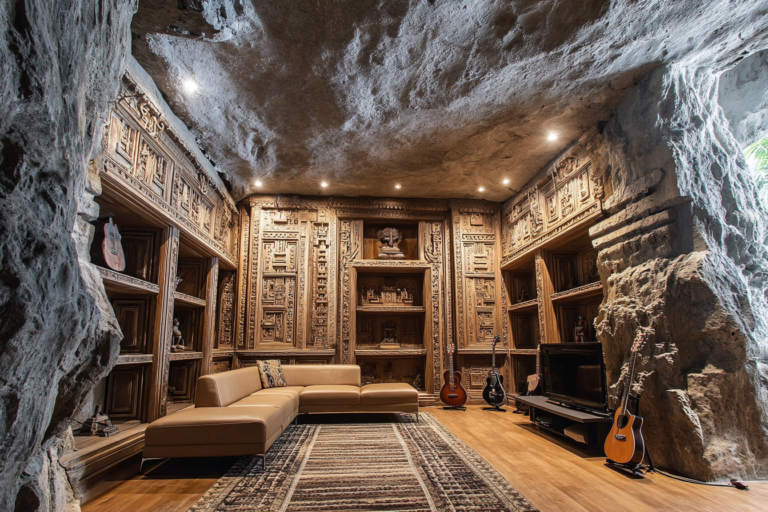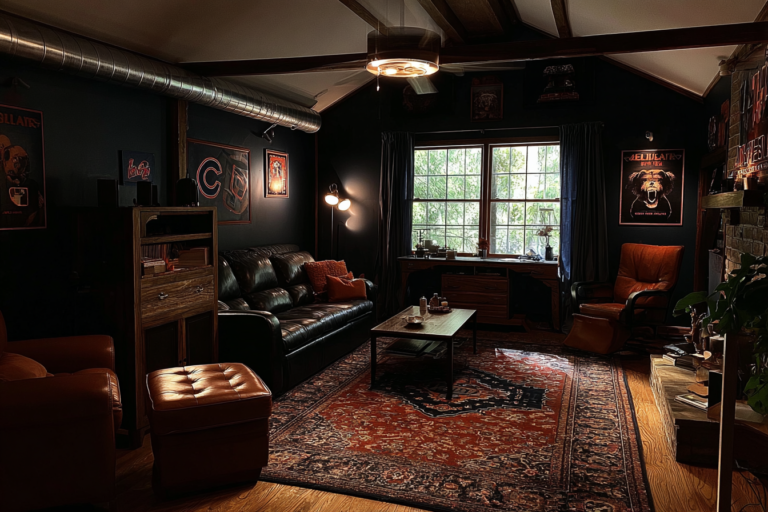
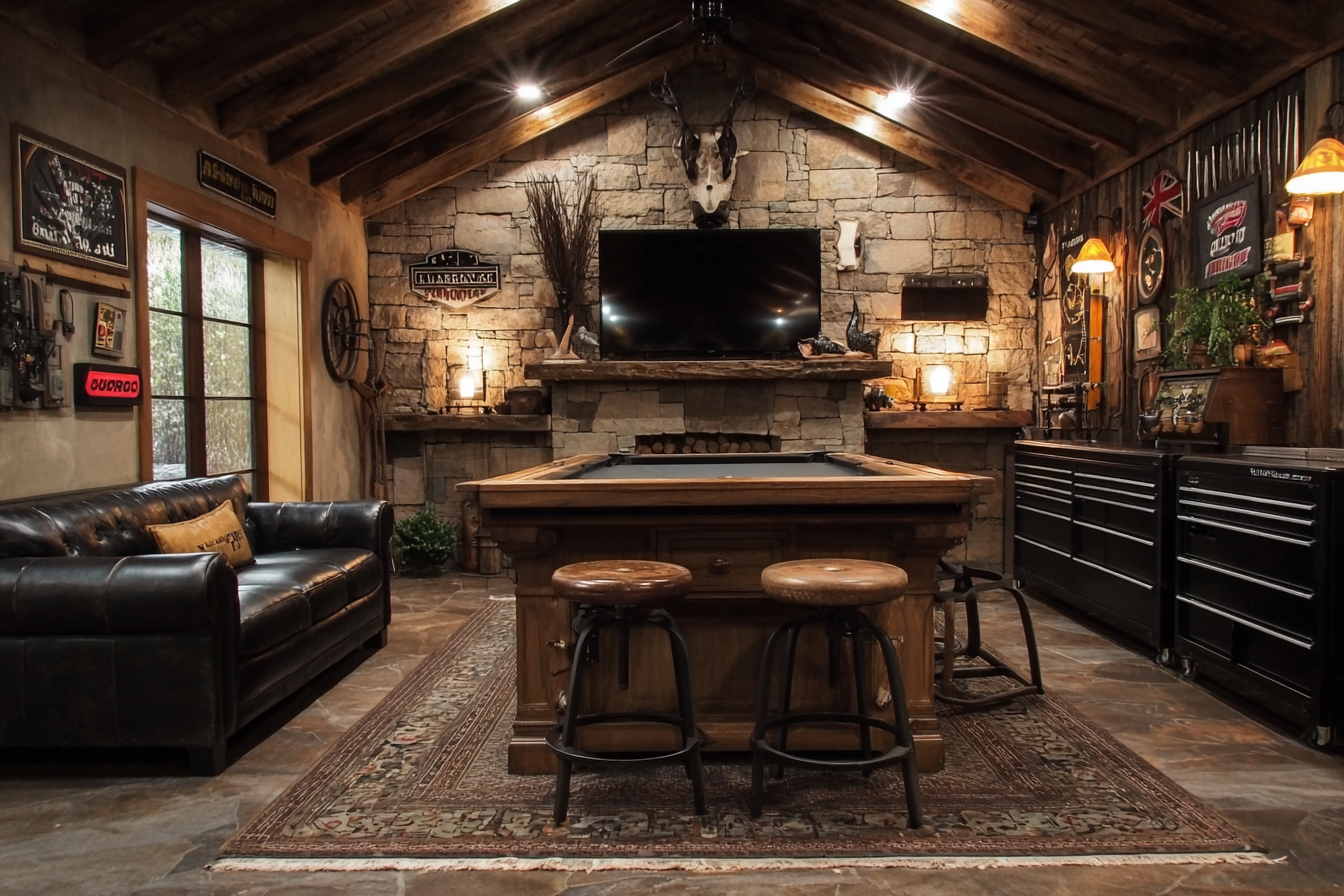
In the current 2026 economic landscape, the “Quality Reset” has redefined home improvement. As residential demand for dedicated hobby spaces has seen a 12% uptick since 2022, homeowners are increasingly looking at existing structures—specifically backyard sheds—as the frontier for personal sanctuaries. This case study analyzes the “Project Respite” conversion, a budget-conscious transformation of a standard 10×12 storage shed into a professional-grade man cave.
The subject of our study, a homeowner in the Pacific Northwest, managed to execute a full conversion for exactly $1,485.60, proving that a high-end “brain sauna” environment does not require a five-figure investment.
The Chronological Evolution: From Clutter to Clarity
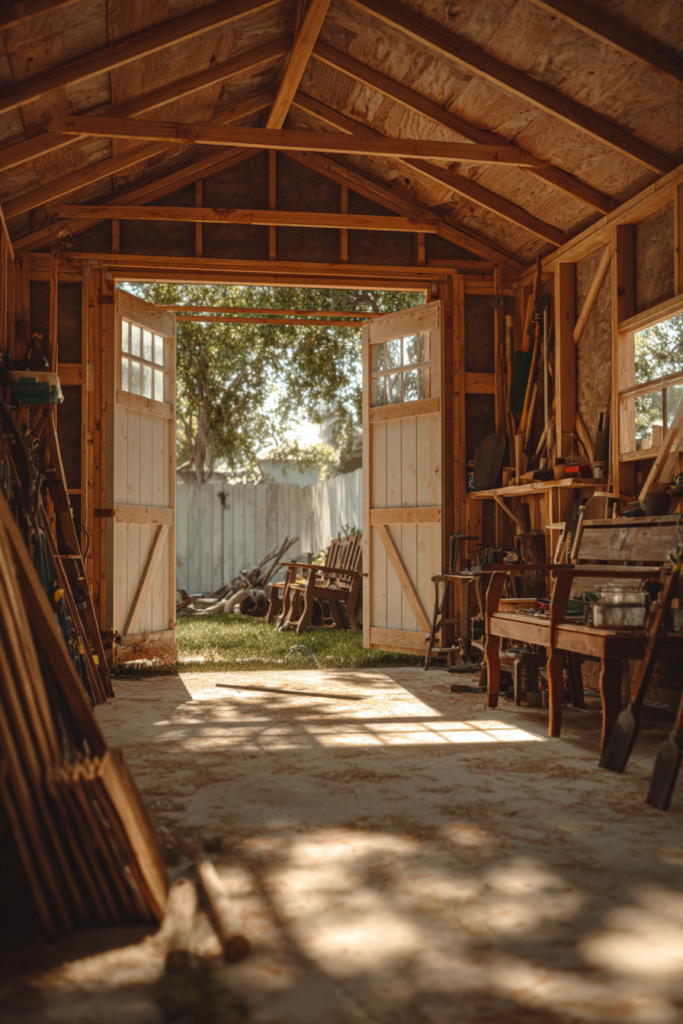
Phase 1: The Audit and Cleanse (Weeks 1-2)
The journey began with an 8-hour deep clean of an existing, uninsulated Tuff Shed. The primary goal was to assess structural integrity.
- Tactical Shift: Instead of buying new storage, the subject sold 60% of the shed’s original contents (unused garden tools and old furniture) on local marketplaces, generating $420 in seed capital.
- Result: The “cost” of the project was effectively lowered before the first piece of lumber was purchased.
Phase 2: Weatherproofing and Infrastructure (Weeks 3-5)
To create a space suitable for a 2026 lifestyle, the shed needed to handle climate fluctuations.
- Insulation Strategy: Using R-13 fiberglass batts for the walls and rigid foam for the ceiling. This was a critical step to ensure the “Eco-Pro” standard, keeping heating costs low during the winter months.
- Electrical: The subject utilized a heavy-duty 10-gauge outdoor extension cord connected to a GFCI-protected power strip as a temporary, non-permanent solution that bypassed the $2,000 cost of a professional electrical trench.
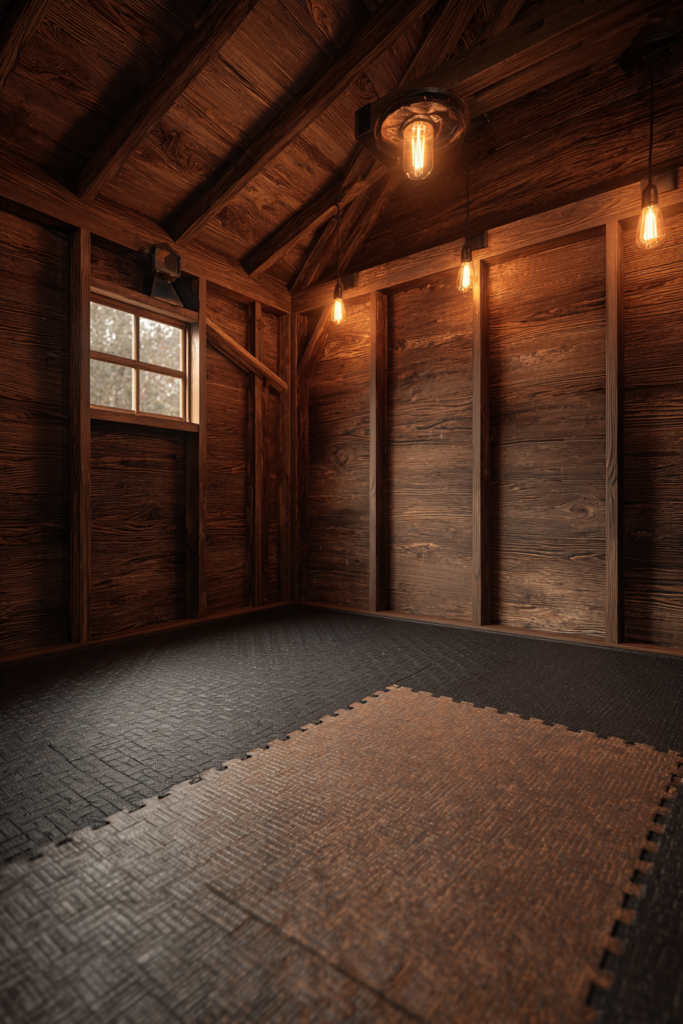
Phase 3: The “Quality Reset” Interior (Weeks 6-10)
This is where the transition from “shed” to “man cave” happened.
- Walls: Instead of expensive drywall, the subject used 1/4-inch plywood sheets stained in a dark walnut. This provided a “traditional artisanal” look at 40% of the cost of finished drywall.
- Flooring: Interlocking foam gym mats with a faux-wood grain. This provided insulation, sound dampening, and comfort for long standing sessions during games.
Specific Numbers and Budget Breakdown
To maintain transparency, the subject provided a detailed ledger of the $1,485.60 total spend:
| Category | Item | Cost |
| Structure | Insulation and Vapor Barrier | $310.00 |
| Surfaces | Plywood Walls and Trim | $245.00 |
| Flooring | Interlocking Foam Mats | $120.00 |
| Furniture | Second-hand Leather Recliner | $85.00 |
| Lighting | Govee RGBIC Wall Lights (2026 Model) | $129.00 |
| Entertainment | Used 50″ Smart TV + Wall Mount | $150.00 |
| Hobby Gear | GoSports 54 Inch Foosball Table | $275.79 |
| Climate | Small Space Heater + Portable AC | $170.81 |
Strategic High-Impact Feature: The GoSports 54-Inch Table
The centerpiece of this budget conversion was the GoSports 54 inch full size foosball table. This choice was the defining “Why” behind the project’s success.
Instead of opting for a cheap tabletop version or a $3,000 tournament table, the subject prioritized the $275.79 GoSports model. At a full 54 inches in length, it provided the regulation spacing required for an “arcade-lite” experience. Because the table features a modern matte finish and independent leg levelers, it added a sense of “Professional Standard” to the room that felt much more expensive than it actually was.
The subject noted that the table served as a “brain sauna,” providing a tactile escape from screens while improving hand-eye coordination.
6 Actionable Lessons for the Budget Converter
- The “Sell-to-Fund” Rule: Before buying insulation, sell the clutter. Use the existing value in the shed to fund the upgrade.
- Focus on Contact Points: Do not spend $500 on a rug. Spend $275 on a high-quality foosball table or a good chair. You interact with these items physically; they define the “feel” of the room.
- Non-Permanent Power: If you are on a budget, avoid the $2,000 electrician bill. High-quality outdoor-rated power solutions can safely run a TV, lights, and a heater for a fraction of the price.
- Insulation is Non-Negotiable: A man cave you can only use three months a year is a waste of money. Spend 20% of your budget on climate control.
- Aesthetic Cohesion: By using consistent wood stains and modern lighting (like RGBIC strips), you can make cheap plywood look like an upscale lounge.
- Regulation Size Matters: When choosing games, never go below “Full Size.” A 54-inch table like the GoSports model ensures your skills are transferable and the game feels “real”.
What Made This Approach Effective?
The subject avoided the “Feature Creep” trap. Many man cave projects fail because the owner tries to build a mini-house. This project succeeded because it treated the shed as a functional hobby vessel.
By choosing the GoSports 54-inch table as the primary asset, the owner ensured the room had a high “re-playability” factor. The table’s weight (approx. 75-90 lbs) provided enough stability for adult matches without requiring a reinforced floor. This focus on “bang-for-the-buck” engineering is the hallmark of a successful 2026 budget build.
Key Takeaways
- Final Cost: $1,485.60 (After selling original clutter).
- Primary Asset: GoSports 54″ Foosball Table ($275.79 in March 2026).
- Time to Completion: 10 weeks of weekend labor.
- Measurable Results: 100% weather-resistant; fits 4 adults comfortably.
- Sustainability: Utilized FSC-certified plywood and “Eco-Pro” insulation.