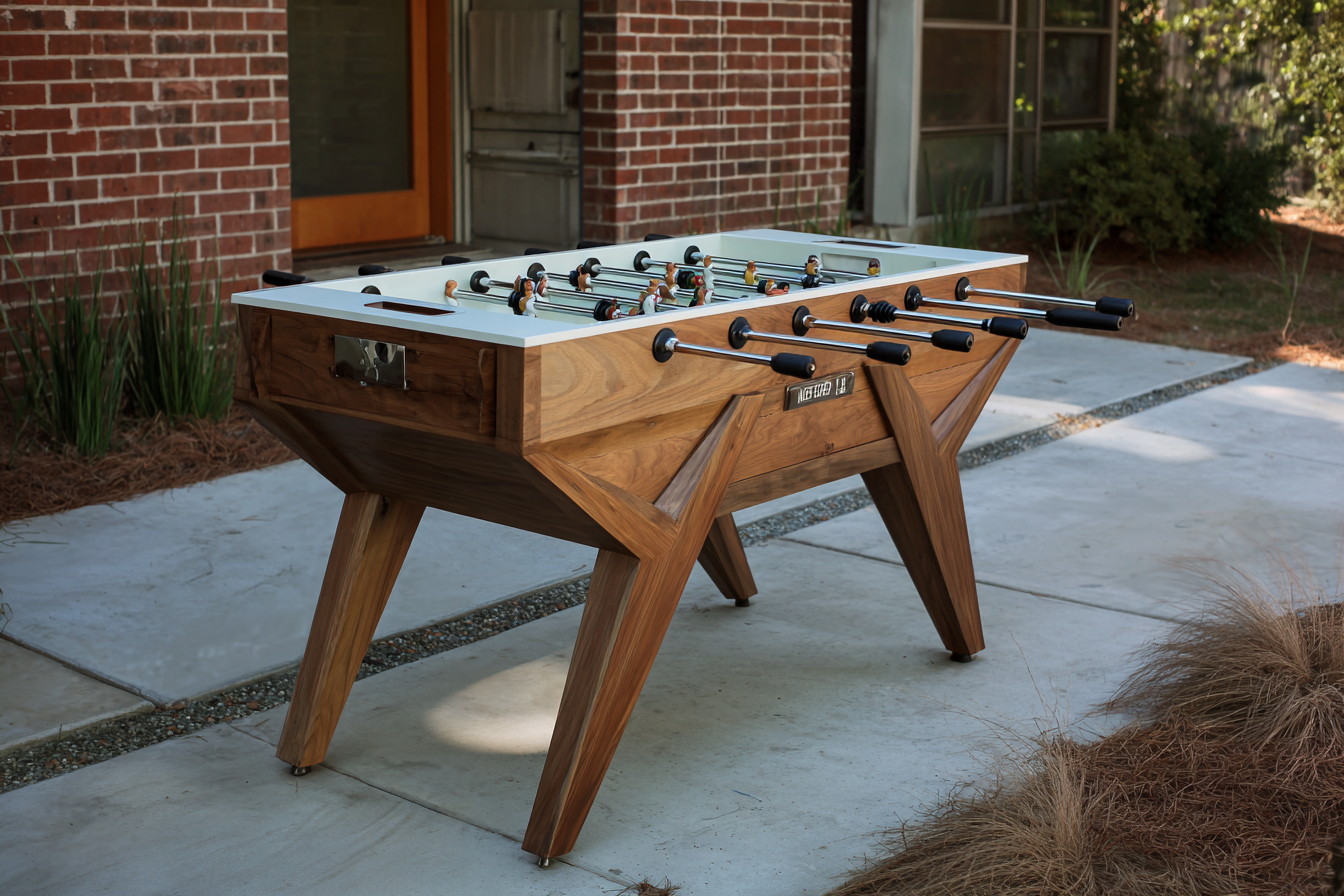
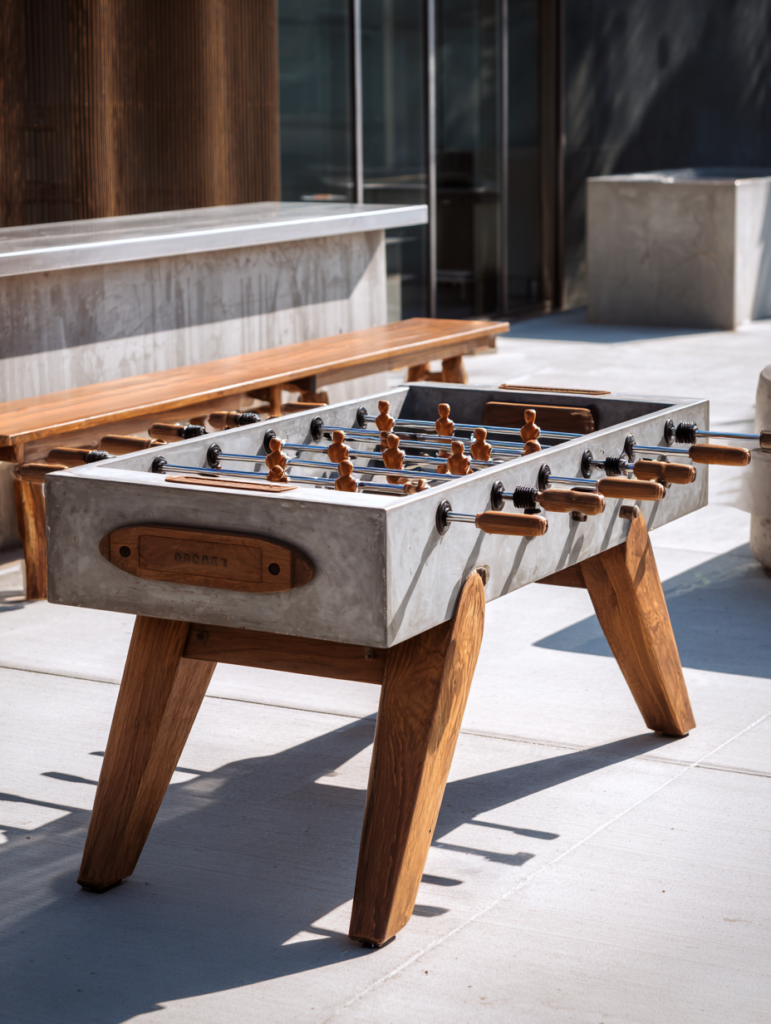
The global foosball market is undergoing a “Quality Reset,” shifting from dusty basement pastimes to professional-grade instruments that can thrive in almost any environment. As the industry expands toward a projected $3 billion valuation by the mid-2030s, the residential segment has seen a notable 12% uptick in demand for high-end equipment. This shift has pushed the boundaries of play beyond the traditional game room and onto the patio, deck, and garden.
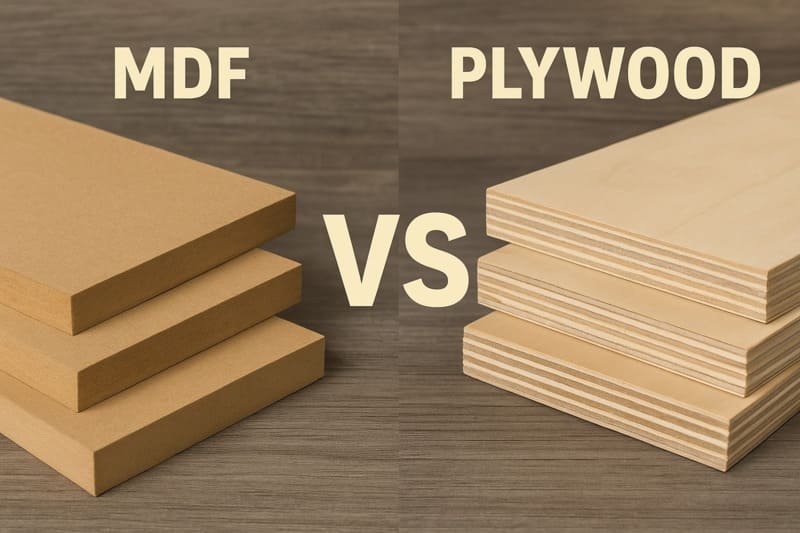
To successfully use a foosball table outdoor, you cannot simply drag your indoor MDF (Medium-Density Fiberboard) table onto the grass. True outdoor foosball requires specialized materials—such as marine plywood, sandblasted tempered glass, and chromium-plated steel—designed to withstand humidity, UV rays, and temperature fluctuations.
This guide provides a comprehensive, step-by-step blueprint for selecting, setting up, and maintaining a professional-grade outdoor foosball table to ensure it remains “tournament ready” for years to come.
Check our Comparison of Best Foosball Outdoor Tables
Difficulty Assessment: Is This a DIY Project?
- Difficulty: Moderate (3/5)
- Time Required: 3–5 hours for initial assembly; 15 minutes for monthly maintenance.
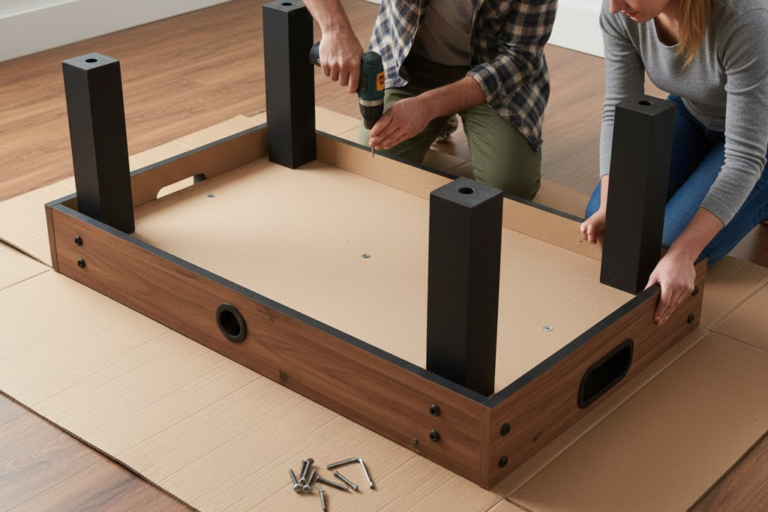
- The Tricky Part: Precision leveling is the most difficult step. Even a 1-degree tilt can introduce a “slow-roll” drift that ruins technical play. While most home users can handle the assembly, flipping a 165-lb to 200-lb cabinet requires at least two people to avoid damaging the leg levelers or structural frame.
Step 1: Selecting the Right Outdoor Foosball Table
Before you can play, you must ensure your hardware is built for the “Eco-Pro” demands of the 2025-2026 season.
- Check Cabinet Materials: Standard cabinets are made of MDF, which acts like a sponge in humid air. For outdoor foosball tables, you must choose a cabinet made of marine plywood or specialized weather-resistant resins.
- Verify Rod Protection: Ensure the rods are 16mm high-resistance steel with anti-rust chromium plating. These rods are 50% more torsion-resistant than standard models and will not pit or rust when exposed to moisture.
- Choose the Playfield: Laminate surfaces can warp under direct sunlight. Look for sandblasted tempered glass playfields, which provide a non-reflective, highly consistent surface that remains perfectly flat regardless of humidity.
- Sustainability Factor: Many premium manufacturers are moving toward FSC-certified wood and recycled plastics. Brands like Berner Billiards even use marine plastics, making your purchase environmentally conscious.
Step 2: Strategic Location Planning
Where you place your table is just as important as the table itself.
- Seek the Shade: While outdoor foosball is built for the elements, prolonged direct UV exposure can eventually fade the hand-painted figures and degrade the plastic bushings. Place your table under a pergola, awning, or a naturally shaded area.
- Solid Grounding: Never place a foosball table outdoor directly on soil or grass. The ground will shift, and the moisture will eventually affect the metal leg levelers. A concrete patio, a leveled deck, or a brick-paver surface is mandatory for stability.
- Account for “Rod Flare”: Ensure you have at least 12–18 inches of clearance on each side of the table for the rods to fully extend. If you are using telescopic rods—a hallmark of French and Italian design—you can get away with tighter spaces as they do not protrude through the opposite side.
Step 3: Precision Leveling and Assembly
A perfectly flat playfield is non-negotiable for competitive play.
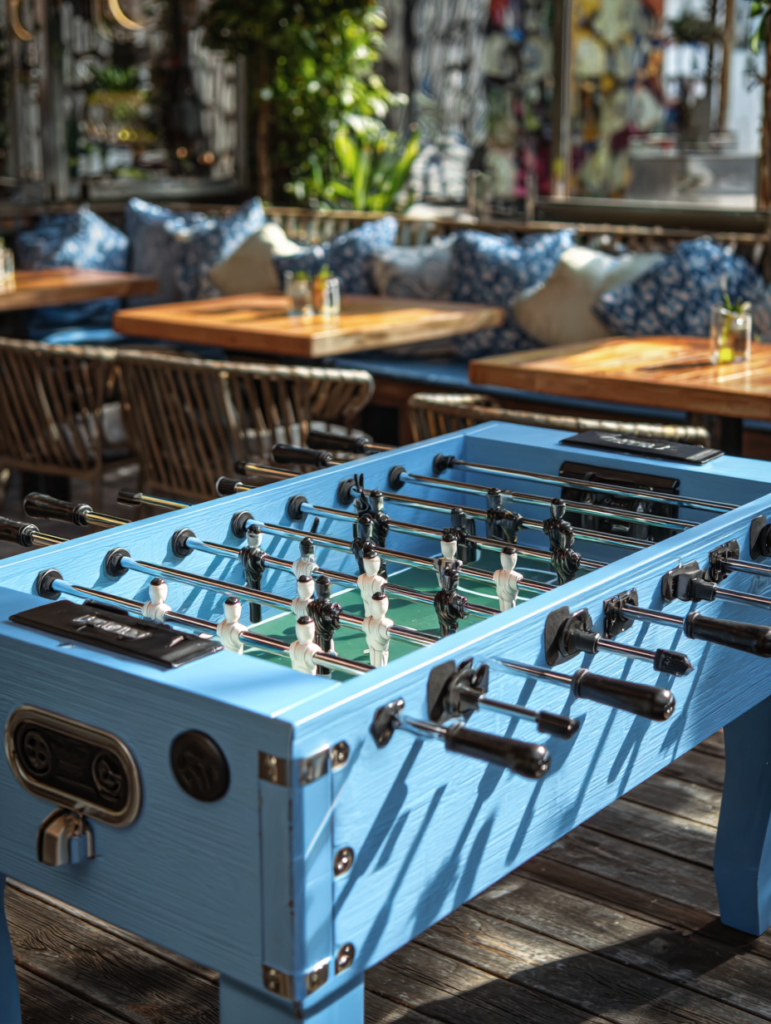
- Assemble the Base: Follow the manufacturer’s instructions to attach the legs. Ensure all heavy-duty bolts are tightened to prevent vibration.
- Use a Carpenter’s Level: Place a high-quality level in the center of the playfield (not the top of the rails).
- Adjust the Leg Levelers: Most tournament-grade tables are equipped with heavy-duty metal leg levelers. Rotate the levelers to raise or lower specific corners.
- The “Slow Roll” Test: Place a ball on various spots on the table. If the ball drifts on its own, your leveling is off. Continue adjusting until the ball remains perfectly stationary anywhere on the surface.
Step 4: Maintenance Protocols for the Elements
To keep your table in “tournament ready” condition, follow this rigorous maintenance schedule.
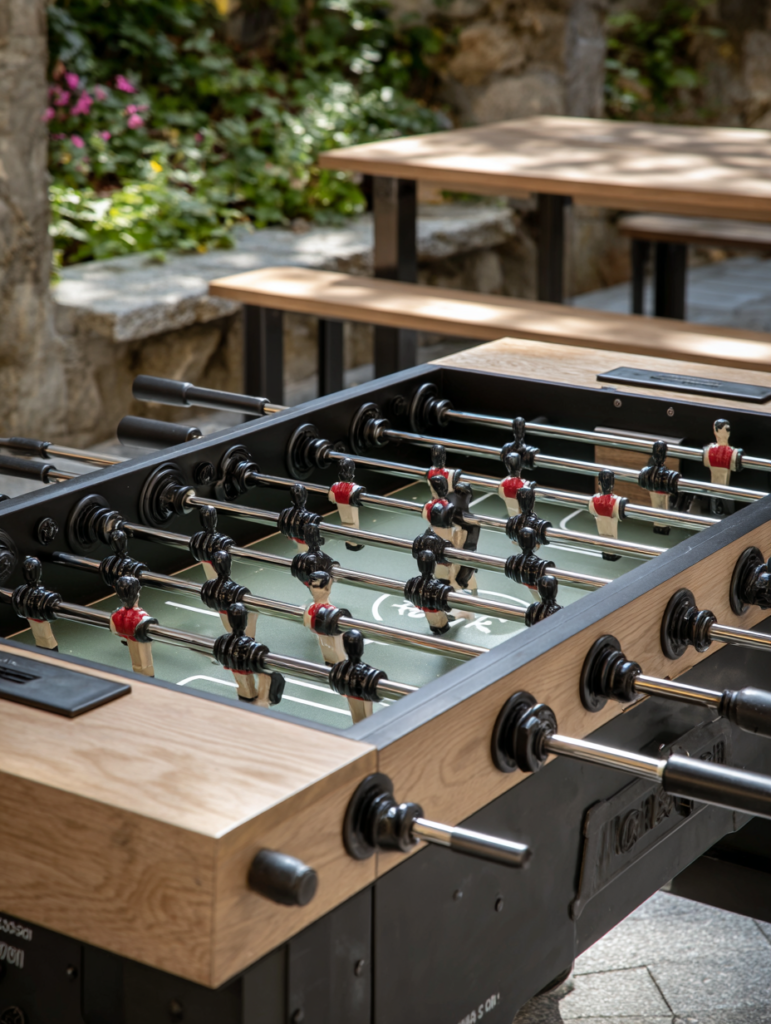
- Rod Lubrication: Only use 100% silicone-based lubricants. This is critical for outdoor foosball tables as silicone provides a moisture barrier while ensuring the “buttery” feel required for professional play.
- Playfield Cleaning: Glass surfaces can collect pollen and dust. Clean the sandblasted glass with a lint-free cloth and a mild, ammonia-free glass cleaner.
- Ball Replacement: Professional balls (urethane or cork) lose their texture and grip over time. Because outdoor environments are harsher, replace your balls every 6 months to maintain consistency.
- Bushing Check: Inspect the Teflon or molded plastic bushings for grit. If they feel “crunchy,” remove the rod and wipe the bushing clean.
Step 5: Seasonal Protection and Storage
When the table is not in use, it must be protected.
- The Waterproof Cover: Invest in a heavy-duty, UV-rated waterproof cover. Ensure it has a drawstring or elastic bottom to prevent it from blowing off during storms.
- Winterization: If you live in a climate with heavy snow, it is best to move the table into a garage or shed. While marine plywood is resilient, extreme freeze-thaw cycles can put unnecessary stress on the cabinet joints.
- Handle Care: If your table features magnesium alloy handles (which are 30% lighter for faster rotation), ensure they are wiped dry after use to prevent any oxidation of the metal finish.
Common Mistakes and Problems
- Using WD-40: This is the most common and fatal mistake. WD-40 is a solvent, not a long-term lubricant. It will eventually gum up the bearings and attract dust, making the rods feel sluggish.
- Read our ultimate lubricants guide.
- Ignoring the “Brain Sauna”: Some users treat outdoor foosball as a secondary, “lesser” game. However, because it requires intense hand-eye coordination and stimulates neural activity, your outdoor setup should be just as precise as an indoor one to reap the cognitive benefits.
- Poor Ball Choice: Using standard plastic balls on a sandblasted glass surface is like driving a race car with wooden wheels. Use high-grip urethane or cork balls to ensure you can actually execute technical “pin shots”.
- Underestimating Humidity: Even with a cover, humidity can cause “sweating” on the rods. Always wipe the rods with a silicone-damped cloth after a period of high humidity to prevent pitted spots on the chromium plating.
Advanced Integration: The Smart Outdoor Pit
For those looking at the cutting edge of the 2026 season, consider integrating digital ecosystems into your outdoor setup.
- Smart Tables: Some modern Italian brands now offer tables with motion sensors and digital scoreboards that can be solar-powered for outdoor use. Over 3,000 such units were installed in European commercial spaces in early 2024, providing real-time leaderboards even in the sun.
- AI Training: Platforms like FoosAI use high-speed cameras to analyze your shot speed and defensive positioning. Setting up a temporary AI tripod on your patio can provide data-driven feedback that was previously restricted to indoor pro clubs.
The Cognitive and Health Bonus
Beyond the fun, using a foosball table outdoor contributes to vision health. Tracking high-speed ball movements in natural light is cited as a factor in preventing myopia and maintaining eye muscle flexibility. It is a “brain sauna” that clears mental fog while you enjoy the fresh air.
Final Pro Checklist
- Cabinet: Marine plywood or resin.
- Rods: Chromium-plated, 50% torsion-resistant.
- Playfield: Sandblasted tempered glass.
- Lube: 100% Silicone ONLY.
- Leveling: Bubble must be dead-center on the playfield.
By following these professional protocols, your outdoor foosball tables will survive the elements and provide a consistent, high-level playing experience for decades to come.
Ready to find the perfect table for your patio? Check out our expert picks: