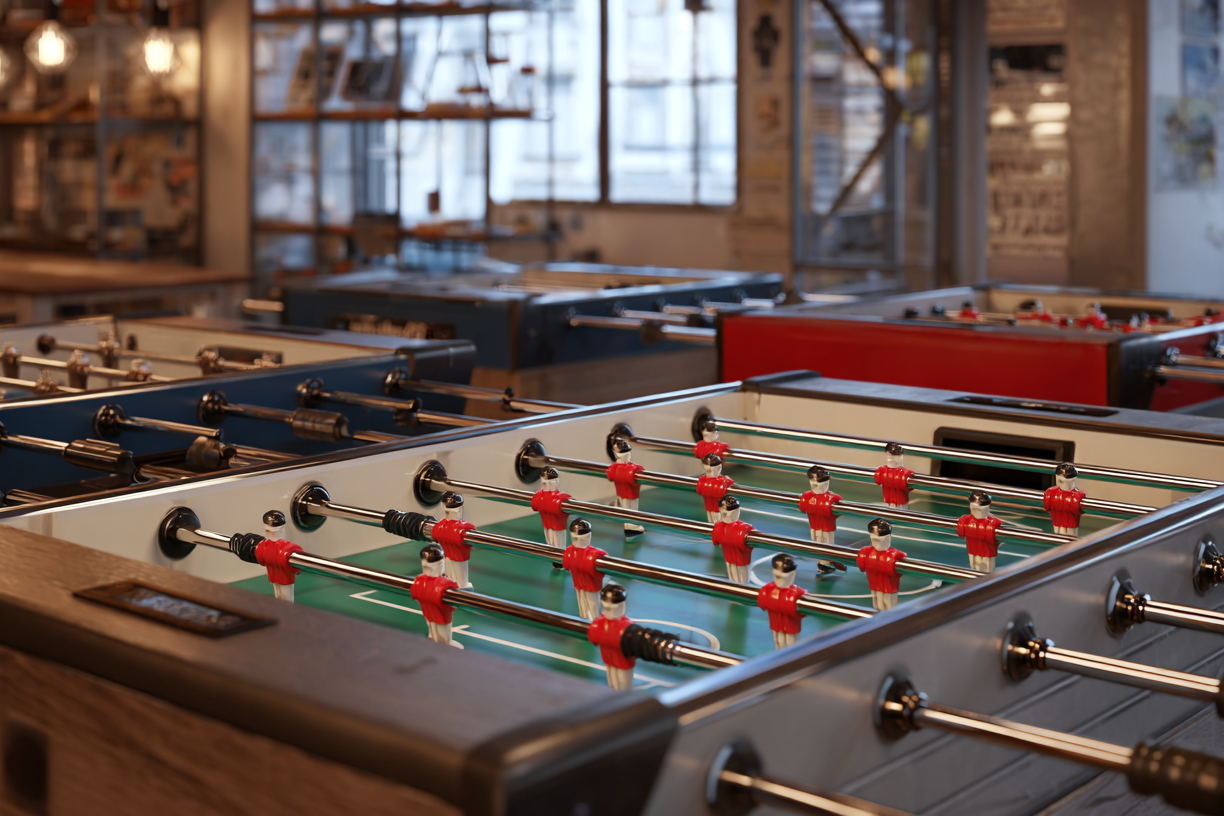
To buy the right foosball table, you must first decide between a recreational unit for casual play and an ITSF-certified professional instrument, ensuring the cabinet weighs at least 200 lbs (90 kg) to prevent shifting during intense matches. Key technical factors to prioritize include hollow steel rods for faster reaction times, a high-density fiberboard (MDF) or solid hardwood cabinet for structural integrity, and counterbalanced players that stay horizontal when released to clear defensive lanes.
What You Need: The Buyer’s Checklist
Before you commit to a purchase, ensure you have evaluated these critical components:
- A Tape Measure: Confirm you have enough space not just for the table (standard is ~56 inches long), but for the rods to fully extend on both sides.
- The Weight Spec: Professional stability requires a cabinet weight of at least 200 lbs; the gold-standard Tornado T-3000 weighs a massive 355 lbs.
- Rod Type Verification: Check if the rods are hollow steel (faster/pro standard) or solid steel (heavier/more fatiguing).
- Leveling System: Look for heavy-duty metal leg levelers to ensure a perfectly flat playfield.
- Brand Reputation: Stick to recognized tournament brands like Tornado, Bonzini, Leonhart, or Garlando.
Step-by-Step Instructions: How to Choose Your Table
- Define Your Playing Style: If you prefer power shots and the “snake shot,” look for a Tornado style table with a urethane ball. If you want high-finesse “pin shots,” a French Bonzini with cork balls is the benchmark.
- Evaluate Cabinet Construction: Look for cabinets at least 1 inch to 1.5 inches thick made from high-density MDF or solid wood to ensure the table doesn’t vibrate or warp over time.
- Inspect the Players: Ensure the men are counterbalanced so they stay in place when you let go of the handle—this is essential for advanced 1-on-1 play.
- Check the Rods and Bearings: Favor hollow steel rods for professional-level acceleration. Test the bushings; high-end tables often use Teflon-infused or split-bearing systems for a “buttery” glide.
- Verify ITSF Certification: If you plan to play competitively, look for the ITSF Official Partner seal. This ensures the table meets global standards for clearances, dimensions, and ball behavior.
Pro Tips: Insider Advice
The Lubrication Secret
Never use WD-40 or oil on your rods, as they will damage the bearings and attract grime. Use 100% silicone-based lubricant to maintain the smooth, professional feel of the rods.
Goalie Preferences
Decide between a 1-man and 3-man goalie system. American-style tables (Tornado) use a 3-man goalie to eliminate the need for sloped corners, as the outer men can reach the ball anywhere in the back.
Common Mistakes to Avoid
- Buying “Toys” from Big-Box Stores: Avoid lightweight tables (under 100 lbs) with plastic rods. They lack the mass required for stability and will shift during play.
- Ignoring the Floor Level: Even the best table plays poorly if it isn’t flat. Never buy a table without adjustable leg levelers, as a minor tilt can introduce unfair advantages.
- Overlooking Maintenance Costs: Professional tables use urethane or cork balls that wear down and lose grip over time. Factor in the cost of replacing balls and lubricant periodically to keep the table in tournament shape.
- Ignoring Safety: In environments with children, consider telescopic rods (which don’t poke through the other side) or Warrior-style rod guards to prevent injuries.